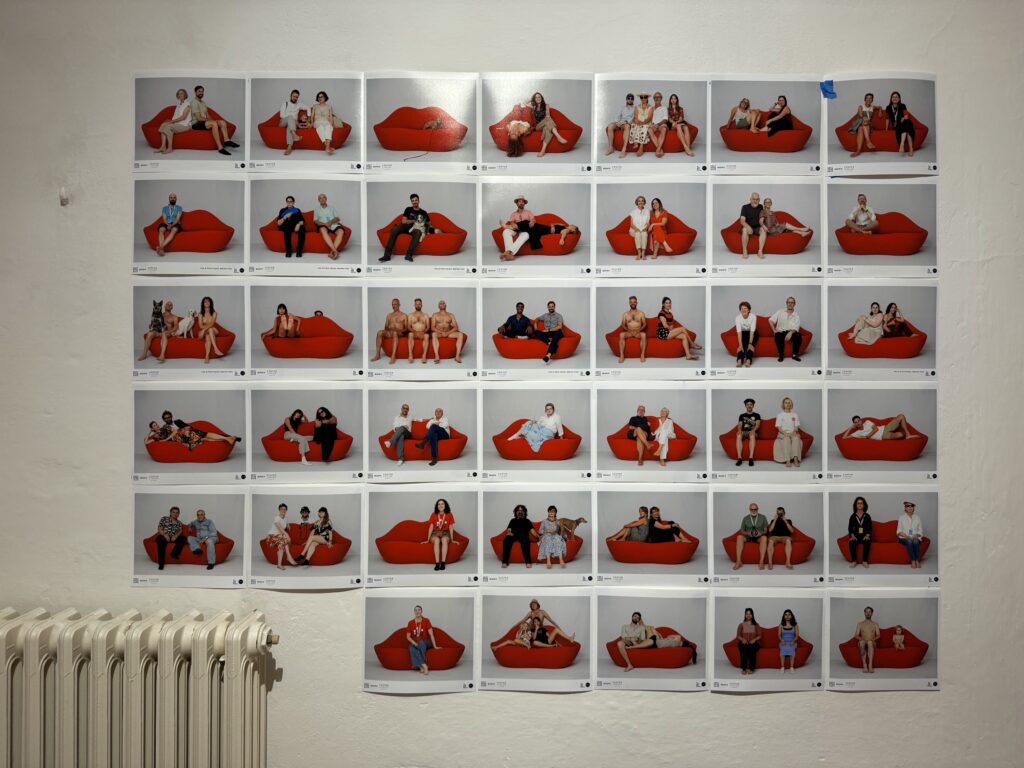
There are images that arrive before their time. This is the story of a method I have seen repeated, in different forms, without ever asking it what its name was.

I saw Back in the Days, Jamel Shabazz’s photography book. I bought it on instinct.

Those images told the story of New York kids through their clothes, postures, attitudes: a culture that seemed to have already found its own visual language.

For a few years, the book just sat there, waiting.

Then my curiosity came back. A photograph, a collection, a campaign.

Koto Bolofo, the acclaimed photographer, identified Islington, in North London, as the place to look for young people in the mid-2000s, unwitting descendants of the kids photographed by Shabazz, carrying that same attitude they continued to express without knowing where it came from.

He explained, and I watched them listen carefully.

That scene already contained one of Hip Hop’s defining characteristics: taking what already exists, moving it, modifying it, and transforming it into something that belongs to a new generation.

The first signs: in 1996, at Romeo Gigli, Tupac appeared with his girlfriend Kidada Jones. Accompanied by his bodyguards, he walked the runway for the SS97 men’s collection in a gold outfit, wearing the unmistakable Death Row Records medallion. That same week, still in Milan, he performed California Love at the presentation of Gianni Versace.

A body and a language that were not expected in those rooms, welcomed by the audience out of curiosity, out of fashion, without yet understanding what was really about to happen.

A deeper transformation was already taking shape in the streets.

Dapper Dan, in Harlem, had understood the power of luxury codes. He took the logos and materials of the major fashion houses, reconstructed them onto his own garments, and returned them to a different audience. The process resembled sampling: an existing material was isolated, manipulated, recomposed, and given a new identity.

That same logic, already present in Shabazz’s photographs, would re-emerge many years later in the work of Ye.

When I met him, his project was still taking shape.

One evening, I received a phone call.

“Hi, it’s Kanye.”

He wanted to meet me.

We met at a hotel in Paris, where he had rented an entire floor. Everyone was barefoot. There were at least thirty people spread around different tables: music, video, stage, merchandising, fashion.

Ye moved from one table to another with surprising clarity.

That room was already a representation of the project he was trying to build. He talked to me about Stax: music, fashion, architecture, food, images, everything within a single identity. A kind of contemporary Bauhaus.

I listened to him and thought it was madness.

But it was exactly the kind of madness I was looking for.

“It’s hard work,” I replied.

“Yes, I know. That’s why I need people like you.”

A week later he called to ask whether I had made up my mind. I told him yes.

He told me about his new album: Yeezus.

I listened to it, and something fell into place.

It wasn’t Rap in the way I had thought of Rap until then. It was something broader, more disturbing, harder to classify.

“I don’t think I would ever have come close to Rap without this record.”

The music made me understand the project better than any explanation could have.

Ye looked at objects as materials to be moved and recomposed, using existing garments as raw material. He was interested in their history, their surface, the memory contained within the object. The process was about making them pass through a new idea until they were transformed.

The creative team’s task: the design process between creativity and technique.

A brief note for those unfamiliar with the subject.

“The programming of a canvas.”

The first stage is the creation of a conceptual map, identifying the main themes, the atmosphere that should permeate the collection, the shapes, the appearance of the fabrics, the colours.

Drawings are produced, followed by a careful search for the “samples” to be used for shape and fit. In this specific case, they serve as the simulacrum of the final product.

Instructions are then given to the pattern makers to create the first base: a rough prototype made from white canvas fabric, simply called a “canvas” in industry jargon, on which the fit is checked and corrections are made.

At the same time, the first dyeing and washing tests are carried out on the selected fabrics, in order to assess how they react.

The first actual prototype is produced, using the chosen fabric, shape, and treatments.

The first prototype is still an intermediate stage: details are modified, construction is checked, the fit is refined, shrinkage is monitored, and the reaction of the components is assessed in the case of garment-dyeing.

Washing and overdyeing require further specific checks.

The product before the name.

Eric, a friend and colleague, was working on the project. He told me the Daft Punk story.

“He had given them some samples and asked them to work on them. The result inevitably sounded like them. Ye then handed it over to a very young DJ, asking him to completely turn it upside down. When it went back to Daft Punk, they were surprised.”

That story explained his method to me.

The phone again.

“What kind of music are you listening to these days?”

“The Eraser, by Thom Yorke.”

“Me too.”

I replied by quoting the line:

“We think the same things at the same time.”

Synchronicity, connection.

Some time later, during a work session, before we started, he put that very CD on.

The music created the mood from which the work was supposed to emerge.

Ye knew the codes of Rap deeply and understood how difficult they were to change. He used to say: “We are the new rockstars, Rap is the new Rock’n’Roll.”

How could you argue with him? There were no rockstars on the covers.

The idea of stealing a few symbols was already part of the method.

The first rupture came when he started wearing skinny jeans. He said it with a certain bitterness: his world didn’t understand it, it wasn’t ready. They tried to talk him out of it; it was considered a betrayal.

Oversize was more than a rule, it was dogma. The silhouette had a meaning, and every choice belonged to a very specific culture.

He had decided to move that code.

With Adidas came the next step: turning that idea into an industrial product.

It was the end of 2014.

The rapper was no longer simply someone who wore fashion. He was becoming an image-maker, a collaborator, and finally, a creator.

Yeezy Season 1 was about to arrive.

I made a video in which Ye launched into a hilarious little performance. It usually happened when he tried something on himself that he felt belonged to him.

“You want the future? Here is the future.”

I lost that video.

The sentence, however, remained.

Looking back at it today, that future was a way of building fashion through music, people, images, materials, and technology.

Shabazz had photographed a language while it was being born.

Dapper Dan had taken the codes of luxury and transformed them for another culture.

Ye had brought that same attitude into a creative and industrial system, to the point of changing the very process through which a product could come into being.

Three different moments of the same intuition.

Perhaps this is what Hip Hop left to fashion: the possibility of looking at what already exists as material that is still open, ready to be moved, sampled, contaminated, and returned with a new identity.

We think the same things at the same time.

Ferruccio Pozzoni
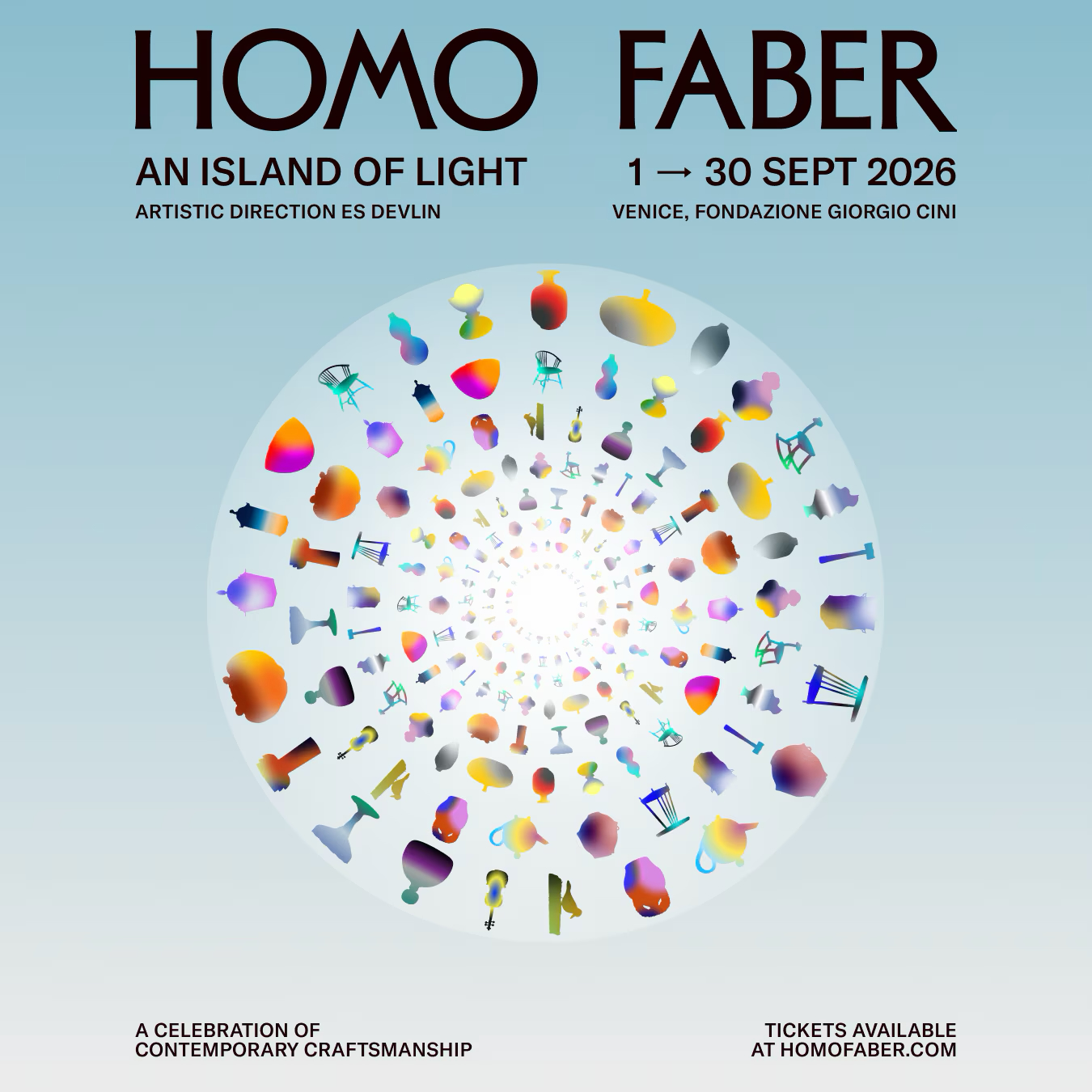
“Homo Faber 2026 – An Island of Light”

Homo faber fortunae suae. Man is the maker of his own fortune, but also – and above all – of his ability to transform matter. This is the thread running through Homo Faber 2026 – An Island of Light, the fourth edition of the international biennial dedicated to contemporary craftsmanship, taking place in Venice from September 1 to 30.

Once again, the heart of the event is the Island of San Giorgio Maggiore, within the spaces of the Giorgio Cini Foundation. But this year, the experience takes on a new dimension: light becomes a narrative material, an element capable of guiding visitors through works, installations and the gestures of artisans.

The artistic direction is entrusted to Es Devlin, the British artist and designer known for her large-scale theatrical installations. Her vision brings light, materials and the human hand into dialogue, creating a journey in which craftsmanship is not simply displayed, but experienced.

Fifteen immersive installations mark the route across the island, alongside works by hundreds of artisans from different parts of the world. Ceramics, glass, textiles, wood, metal and other materials reveal the variety of contemporary craftsmanship, in an ongoing dialogue between tradition and experimentation.

Homo Faber is an invitation to look closely at the work of the artisan, to understand its rhythms, gestures and almost physical relationship with materials. Live demonstrations, workshops, talks and visits allow the public to enter the creative process and discover how, even today, the human hand can remain a protagonist in the age of industrial and digital production.

From the Island of San Giorgio, the journey opens out into the city. With Homo Faber In Città, Venice becomes an integral part of the event: exhibitions, events, talks and itineraries lead visitors to discover workshops and master artisans, bringing to light a heritage of skills that for centuries has been one of the deepest expressions of the lagoon city’s identity.

WHERE: Giorgio Cini Foundation, Island of San Giorgio Maggiore, Venice
OPEN: every day from 10:00 am to 7:00 pm
CLOSES: September 30
HOW TO GET THERE: take the train, then catch vaporetto line 2 and get off at San Giorgio Island.
FOR ALL INFORMATION: www.homofaber.com

WHERE TO STAY

Venice, as we know, is certainly not a cheap destination. There are, however, some good middle-ground options, and we would like to recommend a couple just a few steps from the Accademia stop on vaporetto line 2, which is essential for reaching our destination.

We are in the Dorsoduro sestiere, one of the areas of Venice where tourists have not yet become the dominant presence.

The addresses we suggest are also just a few minutes from the Peggy Guggenheim Collection and the Accademia Galleries, and above all from the Basilica della Salute. Right next to the Basilica is Casa Sanlorenzo, which hosts two Homo Faber exhibitions dedicated to master artisans from Venice and the Veneto region.

The first is the Hotel American Dinesen, a very pleasant hotel overlooking a calle in Dorsoduro, 628. Tel. +39 041 520 4733 — www.hotelamerican.com

The second is directly opposite the hotel: B&B Suite735, at Dorsoduro 735/A. Tel. +39 041 520 8051 — www.suite735.com

WHERE TO EAT

There is plenty of choice, provided you keep an eye on the balance between quality and price. Staying in Dorsoduro:

The first is just a stone’s throw from the accommodation options mentioned above. Al Vecio Forner is a typical Venetian osteria, affected by the influx of tourists but still true to its culinary spirit and welcoming atmosphere. It is located at Dorsoduro 368, Tel. +39 041 521 0343, and is open every day (the kitchen closes at 10:30 pm).

The second is just a short walk away. Al Vecio Marangon, at Dorsoduro 1210 – Calle della Toletta, is a small restaurant with seating also available just outside. An excellent place for Venetian cuisine. Booking is essential, luck aside. Tel. +39 041 277 8554 — www.alveciomarangon.com

Third, also just a few steps away, we could not leave out a place for cichetti, as well as excellent freshly made sandwiches for lunch. Le Cantine del Vino Già Schiavi, at Fondamenta Nani 992, is one of the best Venetian bacari: a historic institution at the foot of the bridge leading to San Trovaso and opposite the historic squero.

Just a note: it is closed on Sundays. On other days it opens at 8:30 am and closes at 2:00 pm, reopening at 4:00 pm and closing at 8:30 pm. Tel. +39 041 523 0034 — www.cantinaschiavi.com

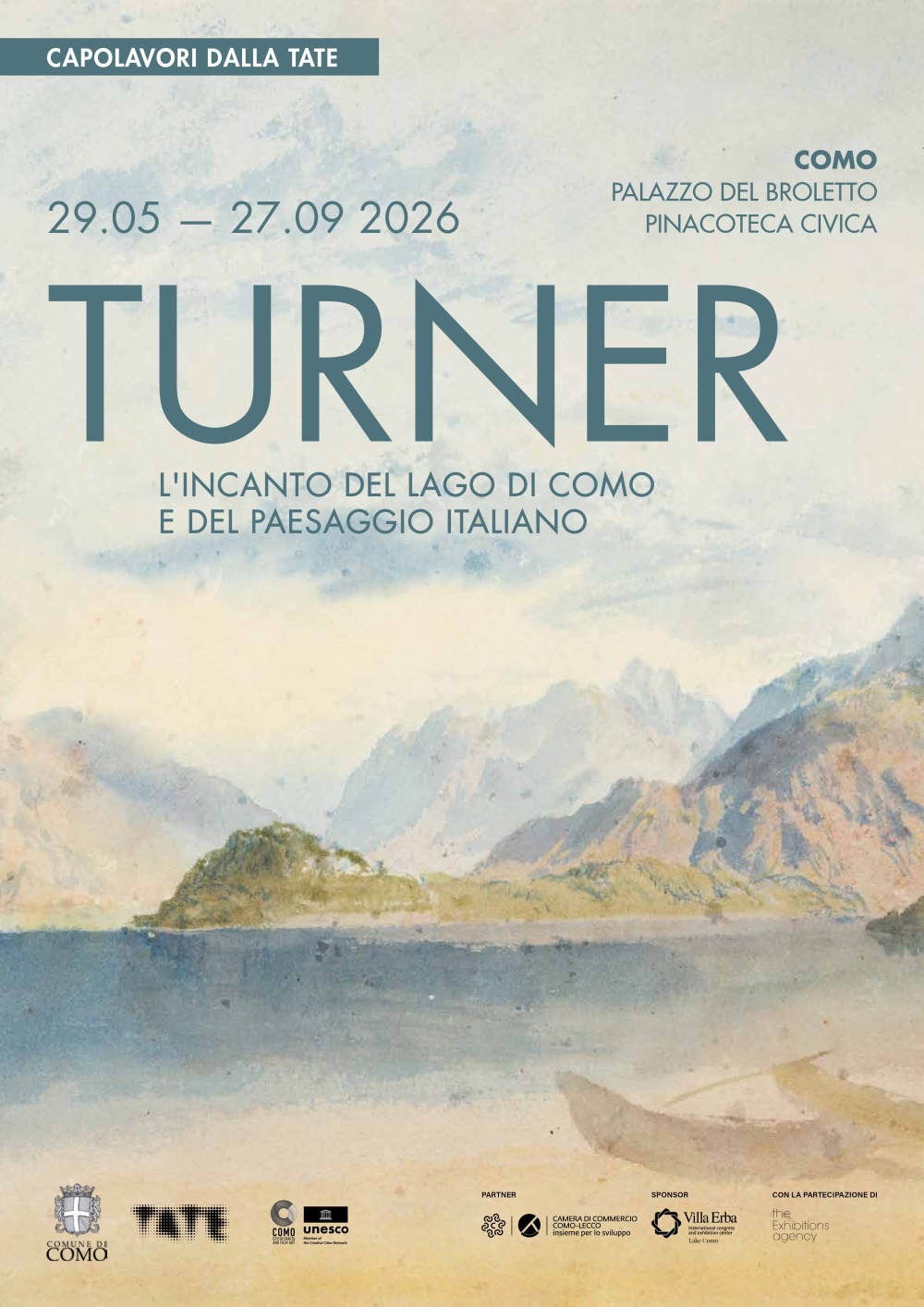
There is a different way of travelling: that of those who, when faced with a landscape, do not simply look, but feel the need to capture what they see on paper. This was the way of William Turner, the great English Romantic painter and tireless explorer who travelled between England, France and Italy.

Until September 27, Como pays tribute to this extraordinary artist with the exhibition “Turner. The Enchantment of Lake Como and the Italian Landscape”, a journey into the painter’s world through his works and travel notes.

Turner travelled with notebooks and sketchbooks, using them almost like a camera avant la lettre. With a few strokes, quick notes and delicate watercolours, he was able to capture whatever caught his eye: a mountain, the outline of a city, a sudden light, the reflection of the water, the changing sky.

And Lake Como itself was for Turner an inexhaustible source of emotions and inspiration. The Italian landscape, with its light, colours and the power of nature, became much more than a simple subject to portray: it was a visual experience that profoundly transformed his way of painting.

In his notebooks, travel thus takes the form of a visual memory: small sketches and watercolours, often created with the speed of a snapshot, which became precious testimonies of an era and, at the same time, the creative laboratory of one of the great masters of modern painting.

Visiting the exhibition therefore means not only admiring Turner, but travelling with Turner: following his gaze, rediscovering nineteenth-century Italy through his drawings and allowing oneself, once again, to be captivated by the enchantment of Lake Como.

The exhibition unfolds across two venues. At the Palazzo del Broletto, seven of the artist’s watercolours are on display, offering an insight into Turner’s extraordinary ability to portray landscape through light and colour. Here, visitors can also experience the immersive film “J. M. W. Turner: On the Wing”, dedicated to the artist’s life and travels.

At the Civic Art Gallery (Pinacoteca Civica), meanwhile, four large oil paintings complete the exhibition, offering a broader perspective on Turner’s painterly research and his relationship with the Italian landscape.

A journey, then, that begins with the small marks traced in notebooks and arrives at the large canvases: from the swift gesture of the travelling artist to the evocative power of his painting.

Organised by the City of Como and Tate London, with the exhibition project curated by Elisabeth Brooke.

WHERE: Palazzo del Broletto and Civic Art Gallery (Pinacoteca Civica)
OPEN: Tuesday to Sunday, from 10:00 am to 6:00 pm
CLOSES: September 27
HOW TO GET THERE: by car, with parking behind the Courthouse, or by train, followed by a short walk along the lakeside
FOR ALL INFORMATION: www.oggiacomo.it

WHERE TO STAY

Como is known for its high-end hospitality and, as we know, it is not necessarily for every budget. That said, there are some interesting and original places worth considering.

The first is Bellavista Hotel & Ristorante, an original three-star hotel dating back to the late 19th century, designed in the Liberty style and recently renovated. Lovely rooms and a spectacular view over Lake Como. It can be reached by car or by funicular, whose station is just 10 metres away. Piazza Bonacossa, Brunate. Tel. +39.031.22.10.31 www.bellavistabrunate.com

The second is Trattoria Laghee in Cernobbio, which, besides being a restaurant, is also a quality B&B, strategically located. Rooms and information: +39.031.34.23.17 www.trattorialagheecernobbio.it

WHERE TO EAT

The choice is exceptionally wide, with a very high turnover of tables. Still, there are two places worth mentioning:

The first: just a stone’s throw from the Duomo, Ristorante Pepe Nero stands out for the high quality of its cuisine. While respecting the characteristics and needs of a tourist-oriented restaurant, it offers traditional dishes revisited with creativity, always with balance and care.

The pizza selection is also excellent. To complete the experience, the kindness and professionalism of the front-of-house staff are truly commendable: attentive and always ready to help.

Via Pietro Boldoni 26
Tel. +39.031.26.03.33
www.pepenerocomo.com

The second is also just a few steps from the Duomo. Osteria del Gallo is Como’s last remaining traditional osteria, authentic and welcoming. Genuine Lombard dishes, carefully prepared and served, followed by an excellent selection of desserts. A place away from the crowds, at Via Vitani 16.

Tel. +39.031.38.68.025
No website presence, apart from photographs and reviews.

Lecco

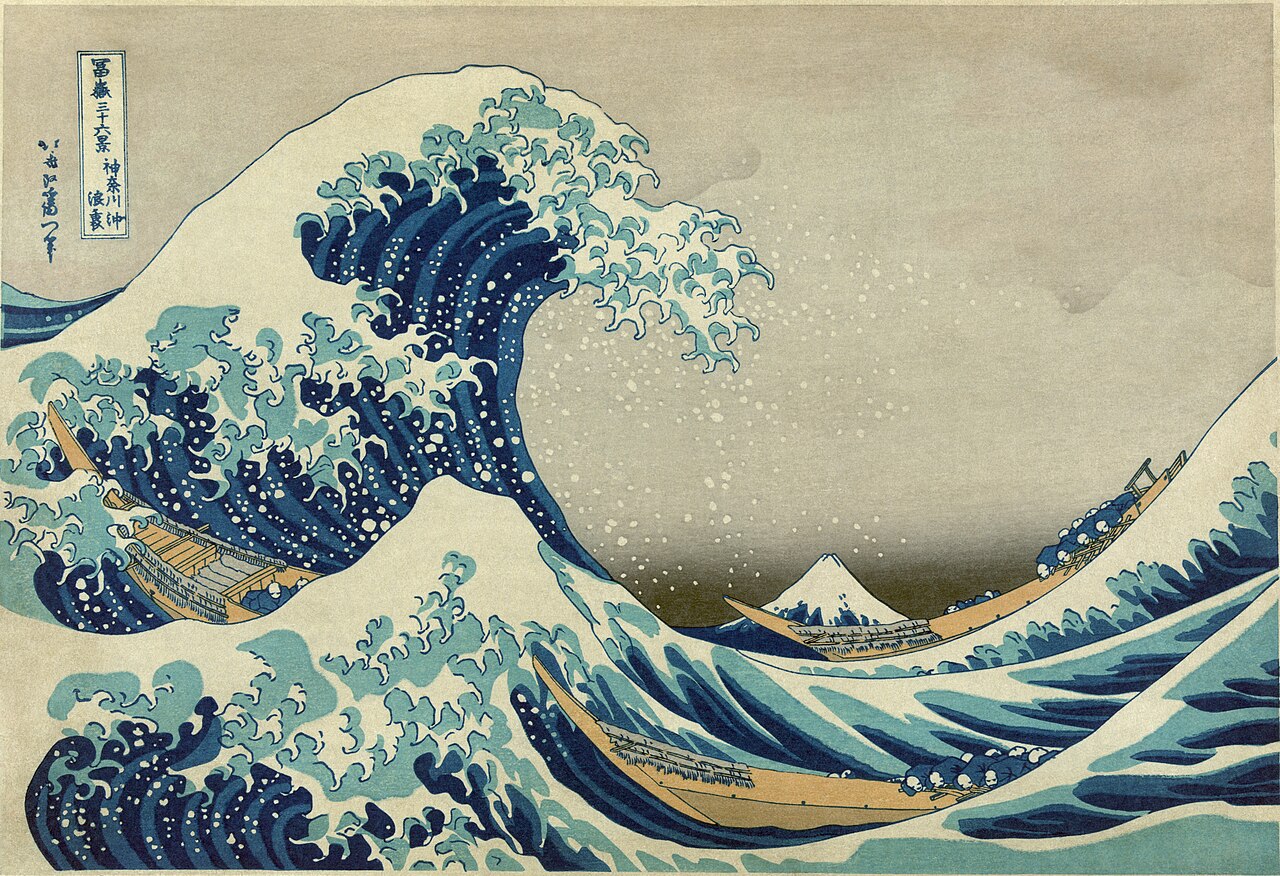
Until September 27, the halls of Palazzo delle Paure in Lecco host the exhibition Hokusai. The Secret of the Wave That Crossed Europe, dedicated to the great Japanese master Katsushika Hokusai (1760–1849).

The exhibition presents 43 works by the artist, a celebrated painter and printmaker and one of the greatest masters of ukiyo-e, the famous “floating world” prints that explore the fleeting nature of existence and the beauty of impermanence.

An eccentric and extraordinarily meticulous artist, Hokusai is known worldwide above all for The Great Wave off Kanagawa, his masterpiece displayed in the exhibition alongside other works celebrating the power of nature, water, and human resilience. An artistic dialogue that finds a particularly evocative setting on the shores of Lake Como, in Lecco.

The exhibition is curated by Paolo Linetti, director of the Mazzocchi Collection Museum of Oriental Art in Coccaglio (Brescia), and is produced and organised by ViDi Cultural and Ponte43, in collaboration with the Municipality of Lecco and the Lecchese Urban Museum System.

The exhibition is also an opportunity to stroll along Lecco’s lakeside promenade and explore its historic centre.

Location

Palazzo delle Paure
Piazza XX Settembre 22 – Lecco

Opening hours

Open on Tuesdays from 10:00 am to 2:00 pm.
On all other opening days until 6:00 pm.
Closed on Mondays.

The exhibition closes on September 27.

How to get there

The train is a very convenient option. Travelling by car is also possible, although parking availability should be considered.

Where to stay and eat

There are many restaurants and cafés around the exhibition area, offering plenty of choice.

For an excellent dining experience, the recommendation is undoubtedly Da Giovannino, located on the beautiful lakeside promenade of Malgrate, just over one kilometre from the exhibition. Creative cuisine and gourmet pizza paired with a unique view.

Tel. +39 0341 201133
www.ristorantedagiovannino.it

For accommodation, the top recommendation is Casa sull’Albero—a hotel that feels like a discovery in itself. An original and beautifully designed location, perfect for relaxation and recharging your energy.

www.casa-sullalbero.eu
Tel. +39 0341 1880440

Alternatively, there is Hotel Promessi Sposi, a tribute to the classic Italian novel that begins its journey through this very landscape. A refined hotel featuring a magnificent panoramic terrace.

www.hotelpromessisposi.it
Tel. +39 0341 202096

Further information

www.simulecco.it

www.vidicultural.com

My journey began at the State Institute of Applied Art in Monza, an extraordinary school where creativity and vision seemed to flow through the very corridors.

At university, I was convinced I wanted to change direction. Then came Max Horkheimer and Theodor W. Adorno’s Dialectic of Enlightenment, together with Walter Benjamin’s The Work of Art in the Age of Mechanical Reproduction. Ideas that sometimes converged and sometimes diverged, yet irresistibly brought me back to art, design, and the timeless fascination of the Bauhaus.

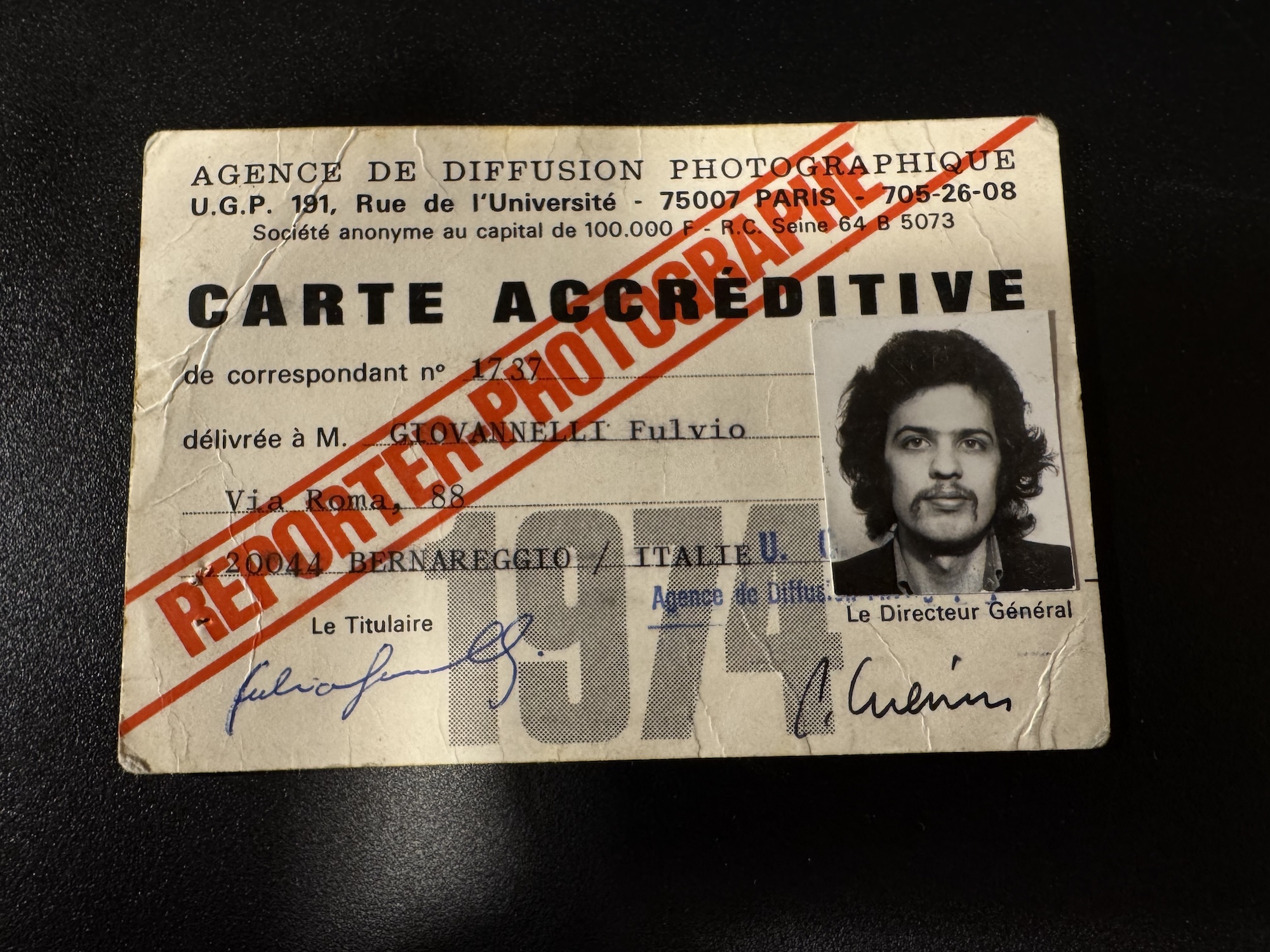
Photography was my first great love. I worked as a correspondent for a French photographic agency and had the opportunity to experience the studios of Aldo Ballo and Oliviero Toscani. Yet my imagination has always remained deeply connected to the poetic vision of Ugo Mulas.

Later, life took me elsewhere, but always within the world of ideas, culture, and aesthetics. I founded a radio station, a weekly newspaper, and two bookshops, one of which also hosted a small yet significant art gallery. Different projects, united by the same pursuit of beauty, language, and culture.

Today, I have been working for many years as an entrepreneur in the multimedia sector, and I am fortunate to continue living between communication, art, and creativity. I still follow that spark that first ignited so long ago and that continues, every day, to inspire my work and feed my curiosity.

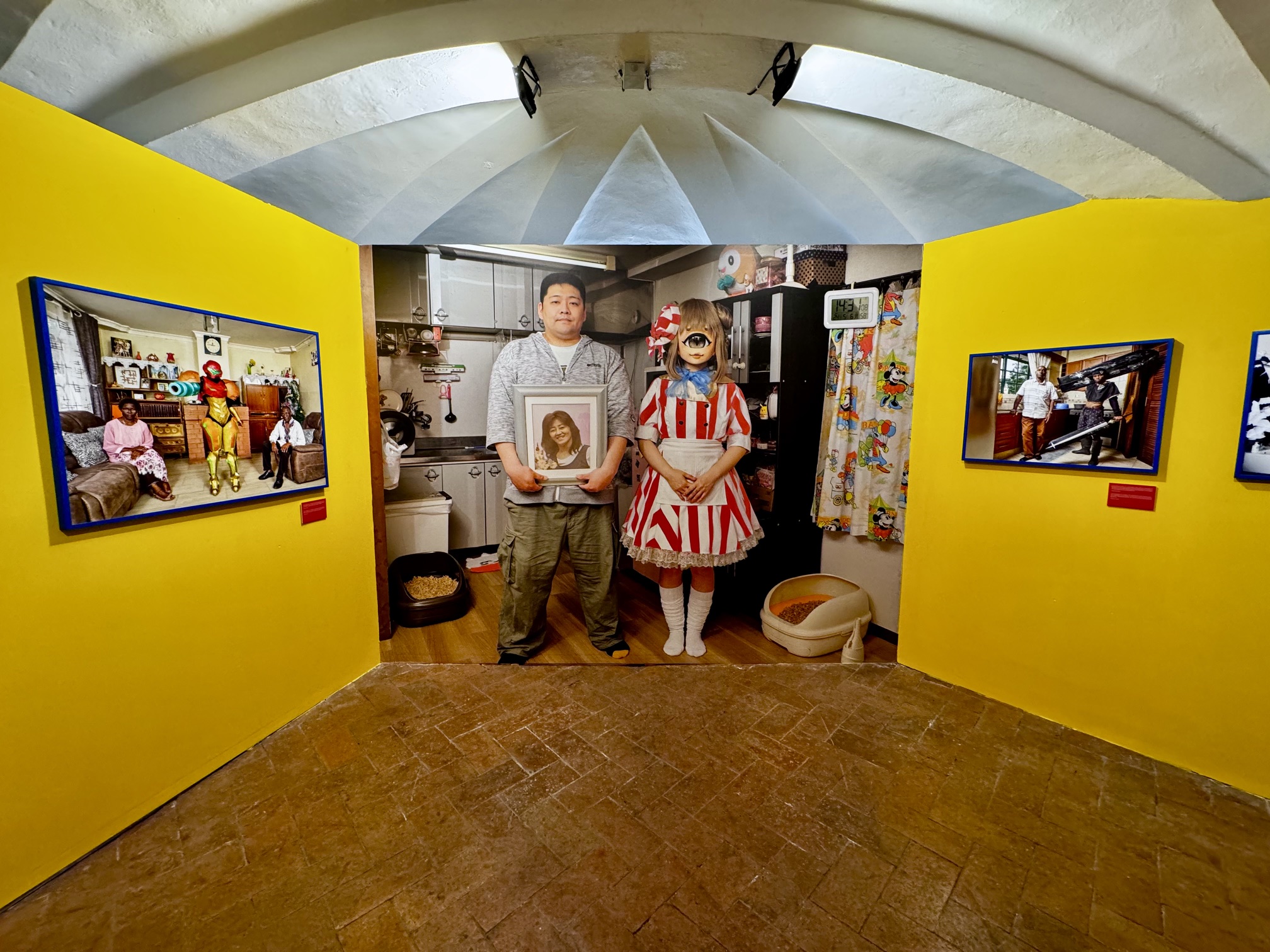
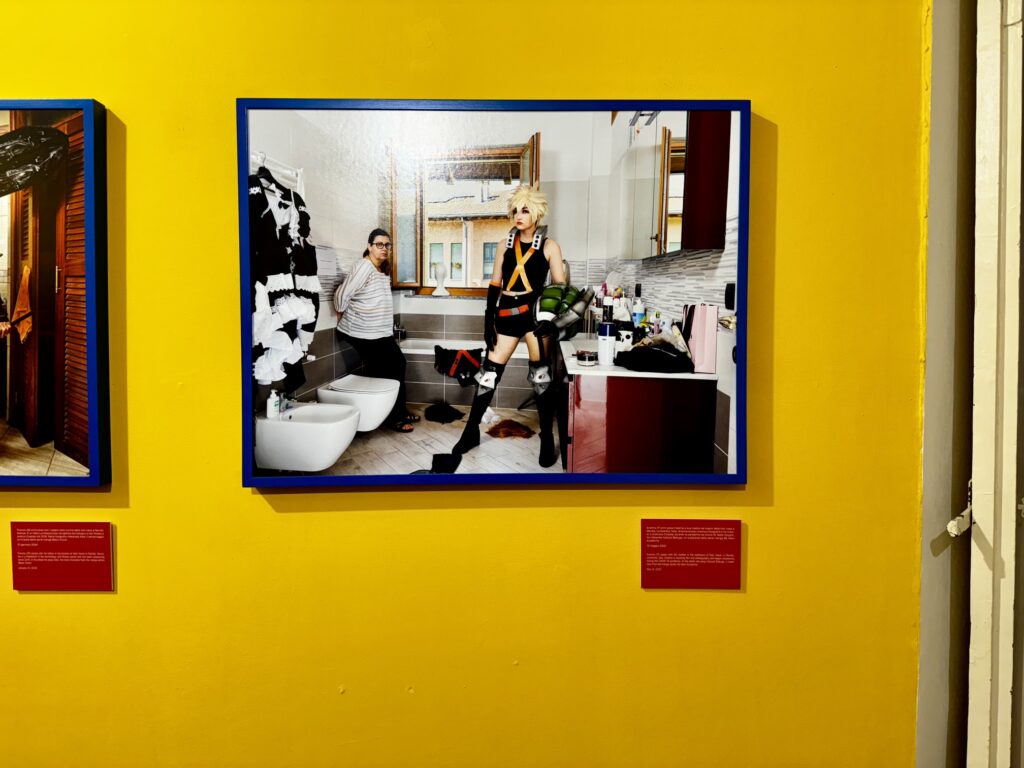
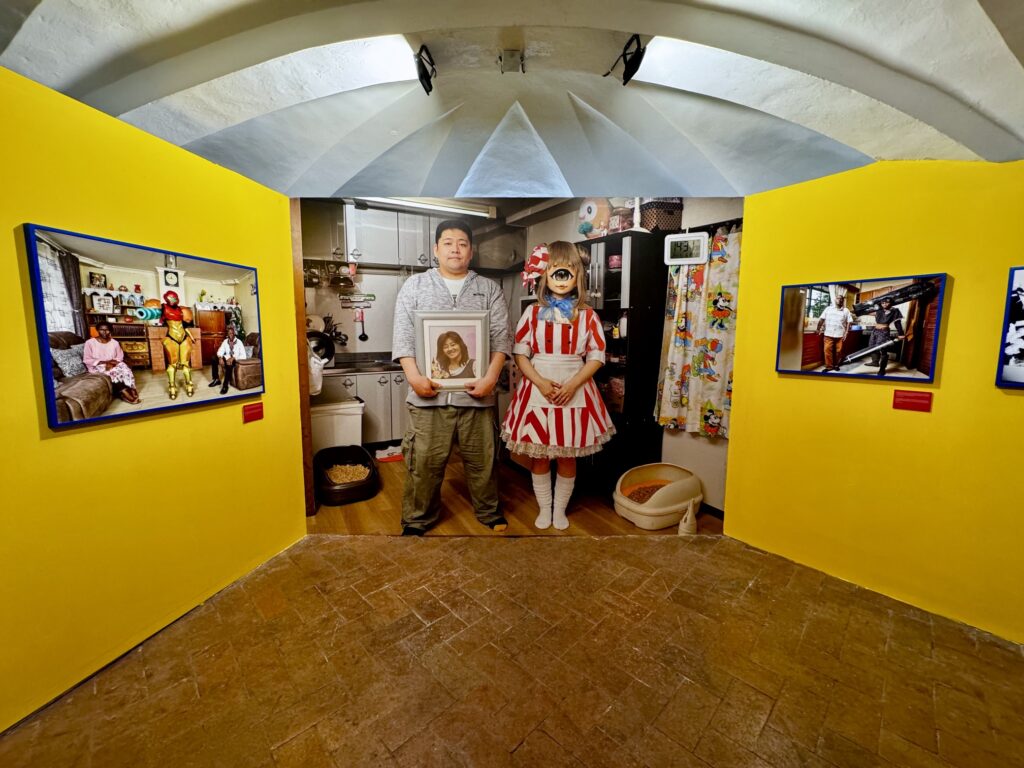
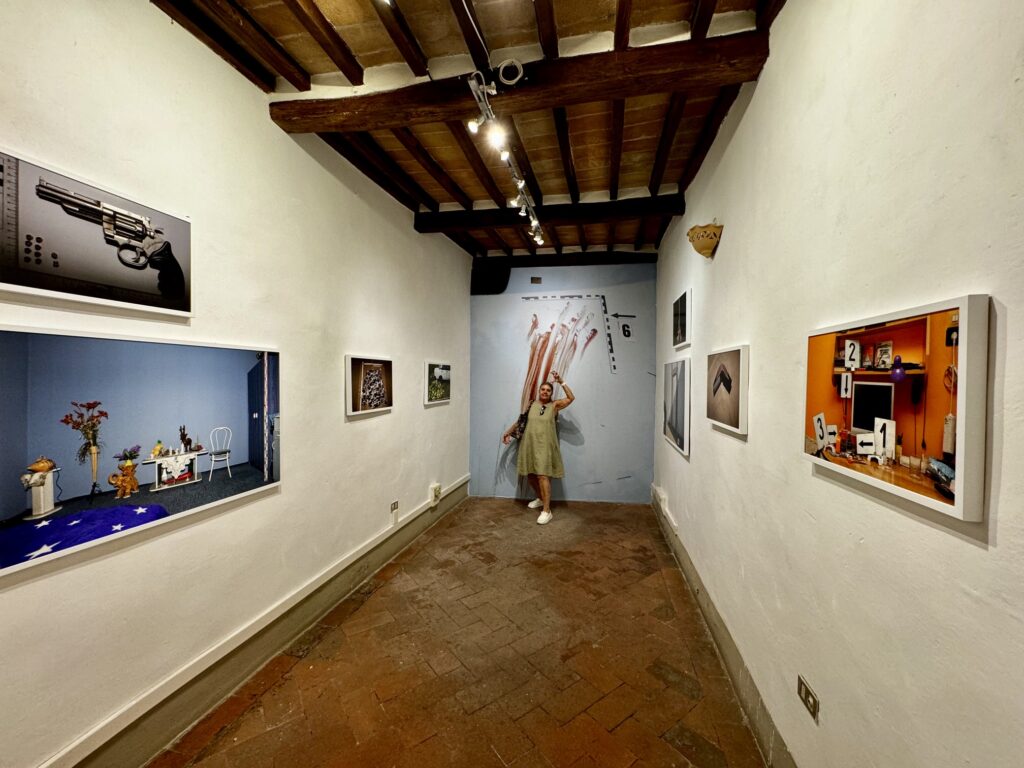
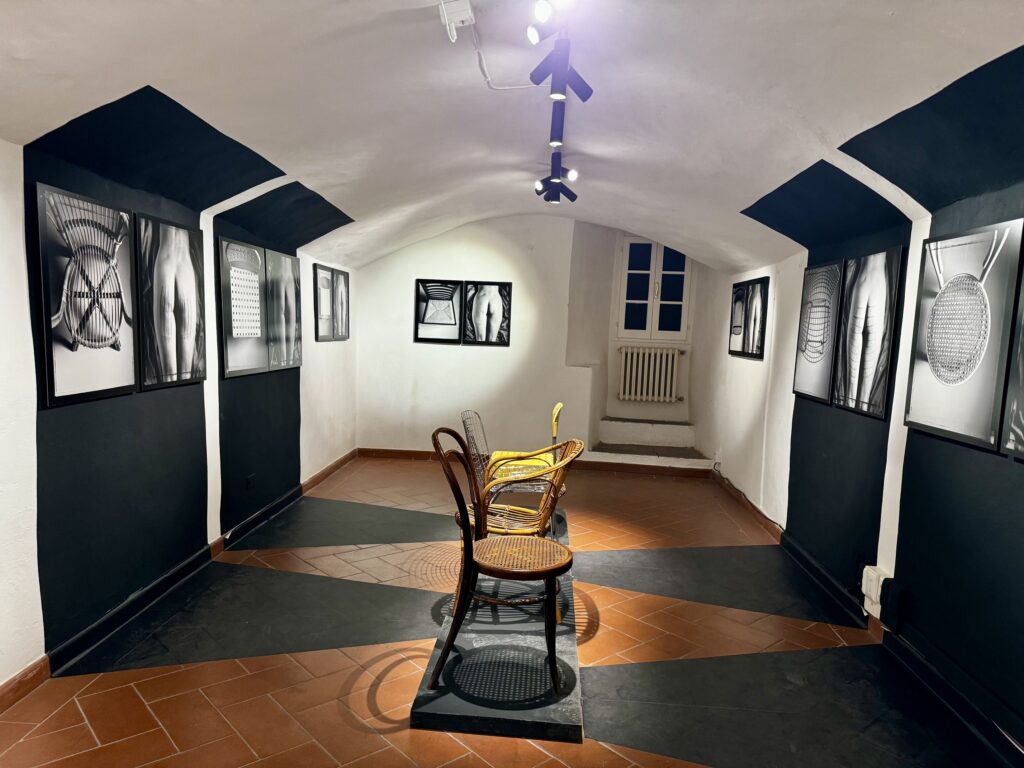
Cortona On The Move is one of the most important international contemporary photography festivals in Italy and has reached its 11th edition. Every year, it transforms the entire historic centre of Cortona into an open-air museum, with exhibitions hosted inside historic buildings, public spaces, and unexpected locations throughout the village, offering visitors a unique exhibition experience.

The images on display explore the present through the lens of photography, which becomes both a witness and a tool for investigating the social, cultural, and environmental transformations of our time.

This year’s edition, titled “Beautiful Country”, is dedicated to Italy and explores the country’s visual and cultural identity, inviting visitors to reflect on its landscapes, contradictions, traditions, and constant evolution.

www.cortonaonthemove.com

The festival closes on November 1st.

How to get there

The easiest route is to reach Arezzo by train and then continue by bus. For those with a bit more energy, cycling is also a wonderful option, offering breathtaking Tuscan landscapes just a short distance from Lake Trasimeno and Umbria.

Travelling by car or motorcycle is perhaps the simplest solution, allowing you to arrive directly in Cortona and enjoy the journey through the surrounding countryside.

Where to stay and eat: options for different budgets

For an unforgettable dining experience, La Bucaccia is a must. A true reference point for Tuscan and, in particular, Aretine cuisine, guided by Romano, a remarkable host with an exceptional passion for hospitality.

Tel. +39 0575 606039
www.labucaccia.it

La Loggetta di Cortona is an excellent restaurant overlooking the historic square, with its beautiful 13th-century loggia. A place where culinary pleasure meets architectural beauty.

Tel. +39 0575 630575
www.laloggetta.com

For those looking for both good food and accommodation, La Locanda del Molino offers a charming rustic restaurant, excellent cuisine, and beautiful rooms set within an ancient mill just a few steps from Cortona. A great choice with a fair price-quality balance.

Tel. +39 0575 614016
www.locandadelmolino.com

The Monastero di Cortona offers a truly unique experience in a strategic location within the city. A journey through time inside an ancient monastery, complete with a spa and swimming pool. A place for relaxation, history, and refined hospitality—an investment in an unforgettable stay.

Tel. +39 0575 1785839
www.monasterodicortona.com

For further information:
www.comune.cortona.ar.it

It may sound like a provocative statement, but only up to a point. Ask fashion designers themselves—the real ones, the people who wrestle with images season after season—and many of them will eventually arrive at the same conclusion. Sooner or later, somewhere on a mood board or in a forgotten reference lying on a studio table, David Bowie always appears.

It is fascinating that this happens above all in fashion. Perhaps because fashion was the first field to truly understand what Bowie was doing. Or rather, to understand that he wasn’t simply getting dressed. He was creating a language.

For a long time, fashion maintained a fairly rigid relationship with clothing. Elegance, belonging, status—even transgression—all existed within recognisable codes. Bowie disrupted that system. He transformed image into an ongoing narrative. He created characters. Style ceased to be static and became a process of constant transformation.

It is probably there that much of contemporary fashion begins.

The idea that a collection can function as an alter ego. That a brand can become a parallel identity. That clothing is not only a way of expressing who we are, but also who we might become—or choose to pretend to be.

Today, this feels entirely natural. Every season is expected to build its own world, tell its own story, project its own emotional identity. But in the 1970s, this way of thinking was far from obvious. Bowie made it visible, accessible, almost inevitable.

Fashion immediately recognised the potential of that vision because Bowie never separated the body from performance. Silhouette, make-up, posture, hair colour, theatricality, photography, movement—everything belonged to the same visual system.

His collaborations with Kansai Yamamoto remain pivotal for precisely this reason: performances expressed through clothing. Fashion stopped decorating the body and began transforming it.

Perhaps this is why Bowie became so essential to designers. Not simply because of the aesthetics—the jumpsuits, the glam, the make-up—but because he introduced a new way of thinking. The idea that fashion could construct temporary identities. Characters. Almost heteronyms.

It recalls Fernando Pessoa and his concept of becoming someone other than oneself. Or Fellini’s characters, forever suspended between autobiography and invention. Bowie brought that sensibility into popular culture, and fashion immediately absorbed its creative potential.

He also fundamentally reshaped the conversation around gender. At a time when menswear remained remarkably rigid, Bowie blurred the boundaries between masculine and feminine. What is most striking is how quickly fashion recognised the visual power of that ambiguity as an entirely new aesthetic possibility.

Much of today’s visual language—from genderless fashion and rock-infused tailoring to the contemporary obsession with fashion identity—can be traced back, at least in part, to that moment.

This is why Bowie continues to reappear throughout contemporary fashion. Not because designers simply quote him, but because he introduced a new way of thinking. He taught fashion something that now seems self-evident: image has the power to create an entire universe.

Fashion rarely predicts the future. Its far rarer gift is recognising it when it arrives from somewhere else.

Ferruccio Pozzoni